WHAT AM I GOING TO SEE AND DO?
NOTE: We are in the process of organizing shore excursions at each of our ports-of-call. These will be exciting adventures that will allow you to immerse yourself in the beauty, culture and history of Alaska. These excursions will be private, consisting of you and your fellow boardgamers. We plan on announcing these soon.
So what are you planning on doing at our many exciting ports-of-call? Even if you are joining us for our small group excursions, you will likely have some additional free time to explore these fascinating locations.
If you are trying to decide what to do, this page is for you! You will find information about exciting and fun things to see and do at each port-of-call. History, culture, art, food ... whatever you are interested in, you will find details of attractions, activities and sights that will satisfy your interests and provide lifelong memories.
Check out the options below and get ready to enjoy the adventures that await!
ANCHORAGE - JUNEAU - SKAGWAY - ICY STRAIT - KETCHIKAN - VANCOUVER
ANCHORAGE
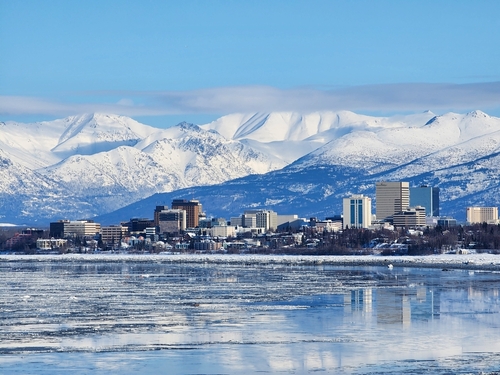
The setting for Anchorage couldn't be more dramatic: soaring, snow-capped mountains on three sides and the Cook Inlet, an arm of the Pacific Ocean, on one side. Arriving visitors never fail to be amazed by the sight.
Anchorage is a relatively young city, being founded in 1915. It owes its founding to the construction of the Alaska Railroad, which was finally completed in 1917. The city's fortunes waxed and waned, and it suffered a tremendous setback with a major earthquake in 1964. The discovery of oil served as an economic savior, leading to the construction of the Trans-Alaska pipeline. This all led to high-paying jobs and the resulting large influx of people. Today, Anchorage is Alaska's largest city with over 300,000 people. 40% of Alaska's population resides here.
The downtown area offers everything you would expect from a vibrant city, including shopping, museums, restaurants and cultural events. The main attraction, however, is the great outdoors, which is on the city's doorstep. Dozens of easily-accessible hiking trails take you into the forests and mountains, and many offer opportunities to spot leaping salmon, lumbering bears and aloof moose.
Our cruise embarks in Seward, which is about a two-hour drive south of Anchorage. However, you will undoubtedly begin your journey in Anchorage, as all major airlines fly here. Arrive early so you can enjoy a taste of what Anchorage has in store.
Tony Knowles Coastal Trail. This is one of the most beautiful coastal trails in all of the United States. This 11-mile trail (you don't have to hike it all) begins in the city's downtown and takes you through lush forests--where you can often spot meandering moose and bears--and to scenic vistas where you can admire the glory of Mount McKinley, North America's tallest peak. Watch carefully and you may even spot a beluga whale frolicking in the waters.
The trail is popular for hikers, joggers, runners and cyclists, so please be aware of others as you hike. Bicycles are available for rent at several downtown locations. Note that there are no cafés or restaurants located directly on the trail, but you can find many just a short walk away while near the city or at the end point at Kincaid Park. It is advisable to bring water, snacks and perhaps carry bear spray.
The trail is accessible at the ends of 2nd and 5th Avenues, as well as at Westchester Lagoon. A downloadable map of the entire trail that highlights major points of interest can be found HERE.
Open: 24 hours, but due to the increased presence of wildlife in the evening, it is recommended to hike during daylight hours.
Ship Creek. Viewing salmon as they make their journey upstream is a major tourist attraction in Alaska, particularly here in Anchorage. Some of the best viewing can be enjoyed on Ship Creek. The creek is dammed downtown and there is a footbridge that allows access to both sides. The 2.9 mile one-way footpath provides views of the creek and city, but the main area to view the salmon is at the Ship Creek Overlook Park. Directions to the park can be found HERE.
As you wander east along the trail, you will find informative plaques and markers detailing the history of Alaska's early days as a railroad camp and tent city. While strolling, keep an eye out for beavers, bald eagles and even bears.
Near the east end of the trail is the William Jack Fernandez Fish Hatchery, a huge aquacultural facility where up to six million coho salmon, rainbow trout and Arctic char are raised each year. This is another location where you can often spot the salmon as they make their journey upstream. Entrance to the hatchery is free and it is open from 8am - 4pm.
Open: The Ship Creek Overlook Park is open from 6am - 11pm. Exercise caution if going at night as the wildlife is more active.
Flattop Mountain. At 3500 feet, Alaska's most popular peak is teeny compared to other mountains in the state. However, its proximity to Anchorage and its relatively short trail length has solidified its status. The 3-mile round-trip hike to the apex has an elevation gain of 1,500 feet and rewards trekkers with enchanting views of the city and Cook Inlet.
If you are not keen on the elevation gain, there are several easier hikes near the base of the mountain, including a wheelchair-accessible pathway.
The trail is located about a 25-minute drive from downtown Anchorage. There are no public transportation options, but Downtown Bicycle Rental offers a once-a-day shuttle to and from the trailhead. The shuttle departs at 12:15pm and returns at 4:30pm. The cost is $25 round trip and tickets should be purchased in advance using this site.
Open: 24 hours, but best to hike during daylight hours.
Anchorage Museum. This modernistic building displays dozens and dozens of exhibits featuring native art, history and culture, as well as displays on science, ecology and more. The museum is dedicated to exploring the land, peoples, art and history of Alaska. A main feature of the museum is the Arctic Studies Center, which displays more than 600 objects from Alaskan Native cultures. It also has several short films where you can learn more about modern-day Native life.
The museum does have special exhibits for limited periods of time, so you should check the website to learn which exhibitions will be there on the day of your visit.
While most museums have a mundane gift shop, the shop here is one of the best places to purchase Native Alaskan art.
Admission is $25 (Canadian) for adults, with discounts available for seniors and children. You can purchase tickets at the museum or online.
Open: 10am - 6pm
Oscar Anderson House Museum. Just a 20 minute stroll from the Anchorage Museum is the Oscar Anderson House Museum. This tiny abode was the first wood-frame home constructed in Anchorage, way back in 1915. It was built in what was originally the tent city. Anderson was a Swedish immigrant who purchased several of the original lots offered for sale by the U.S. government. The construction site had incredible views of the waters and mountains surrounding what would be come Anchorage.
On the 45-minute guided tour of the furnished home you will learn about the Anderson family and their life in Anchorage. You will also learn about how the city was born and grew, surviving the devastating earthquake of 1964. The entrance fee is a $10 (Canadian).
NOTE: The home suffered basement flooding in early 2026 and is currently closed for repairs. It is scheduled to open for the 2027 season.
Open: Noon - 4pm (closed Mondays)
JUNEAU, ALASKA
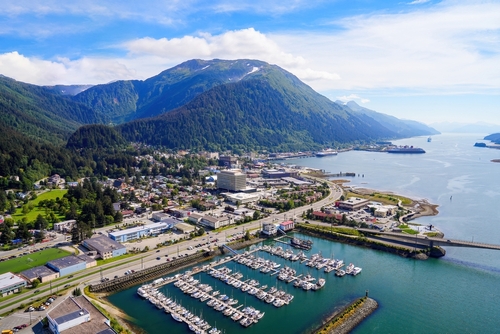
A bit of trivia: Juneau is the only state capital that cannot be reached by road. Boat and airplane are the main methods of transportation needed to visit our 49th state's capital.
Surrounded by dramatic mountains and icy waters, Juneau's downtown is a mixture of the old and new. A few areas, particularly South Franklin Street, harken back to its pioneer days, while others reflect a modern, vibrant city. Founded by settlers in 1880, the area had been long inhabited by native Americans, particularly the Tlingit people. The lure of riches -- gold -- enticed settlers from across America and other countries. Soon, Juneau was a small but prosperous town. Today, there is still gold in dem der hills, but mining has been joined by fishing and tourism as the city's main industries.
The city itself offers visitors fine museums, where they can learn about the native peoples, the goldrush, mining and local history. Most of the major attractions, as well as shops, restaurants and bars, are an easy walk from the cruise terminal. If you want to get out into the surrounding wilderness, however, your options include organized tours (see our shore excursions on our Merch page), shuttle bus or taxis.
We will be in port from 9am to 10pm, so you will have an afternoon and evening to explore the town and surrounding areas. Read on to discover some exciting options!
DOWNTOWN
Alaska State Libraries, Archives and Museums. This wonderful museum is one of Alaska's most important cultural sights. Visitors can learn about Alaska's history, including the indigenous peoples, through numerous exhibits, artifacts and historical photos and records. Special exhibits feature native American art, including works by contemporary artists.
The museum is just a short 15 minute walk from the cruise terminal, and is located in the downtown area near dozens of shops and restaurants.
Open: 9am - 4:30pm
Sealaska Heritage's Walter Soboleff Building. There is no better place to learn about and experience Juneau's native population than the Walter Soboleff Building. You will walk through an authentic clan house filled with artifacts from the native peoples. Through interactive exhibits you will listen to their stories and learn about their history.
In addition, native American art, sculptures and more are on display, including the largest glass screen in the world. There are always special exhibits, so be sure to check out their website for further details.
The admission price varies, but you can expect to pay about $10 per adult.
Open: 10am - 6pm
Seawalk and Totem Trail. This 3-mile waterfront path is wonderful for strolling and enjoying the lovely and sometimes breathtaking scenery. The pathway is easily accessible directly from the cruise terminal. Along the way, you will pass a half dozen beautifully carved native totems. You can download the Totem Trail map, which includes the history and meaning of each totem, HERE.
The southern section of the path connects the popular South Franklin Street (see below) and offers a quieter, less crowded walk. It also passes the popular and useful Juneau Visitor Center, which is a great place to stop to pick-up walking maps of the town. This walk along South Franklin Street and Marine Way concludes at Marine Park, a small coastal park that is scheduled to reopen in April 2027.
The northern section of the walk travels from Marine Park along Egan Drive and offers grand views of Gastineau Channel and Douglas Island. Along the way you can learn about the local history and wildlife thanks to informational signs. The conclusion of this section is Overstreet Park, home to the iconic whale sculpture, which is a popular photo location.
This is a comfortable, easy walk that offers plenty of opportunities to rest, visit shops and grab a beverage or bite to eat.
South Franklin Street. Tucked away and surrounded by modern buildings, South Franklin Street maintains some of the architecture and feel of the 1920s and 1930s. Many storefronts are now small craft and souvenir shops that cater to both locals and tourists. You can also satisfy that afternoon hunger by stopping in one of the local snack shops, including a salmon store.
If you are craving an adult beverage accompanied by local history, stop in at the Alaska Hotel and Bar, which is on the National Register of Historic Places. When the hotel opened in 1913, there were 30 saloons in Juneau. The hotel's bar gives a glimpse into that bygone era with rich Victorian-era furniture. Belly-up to the bar and enjoy one of their wide range of whiskey offerings. Other spirits are available.
If you are into Western lore, you may want to make a quick visit to the Red Dog Saloon to view Wyatt Earp's revolver that he carried in Nome. The saloon is also a neat place to grab a sandwich or snack.
Open: Most shops are open from 9am - 8pm, although some, particularly the bars and restaurants, remain open later.
THE SURROUNDING AREA
Mendenhall Glacier. Alaska's most visited glacier is truly an amazing sight. The 13-mile long glacier (although it is retreating) can be explored by strolling along several nature trails, which lead along Mendenhall Lake to Nugget Falls and into the surrounding mountains. Trails to various glacier overlooks vary in length from .3 miles to 3 miles. The trails begin at the Mendenhall Visitor Center, where you can obtain trail maps to help guide you.
A recommended viewing point is the elevated platform located about a half mile south of the Visitor Center along the Moraine Ecology Trail. The viewing platform allows visitors to look for spawning sockeye and salmon. Since salmon are an Alaskan bear's delicacy, you may even spot one or more of the native bears.
There are several companies that lead bus shuttles and tours from Juneau to the Visitor Center. One option is the Blue Bus offered by M&M Tours. The to-and-from shuttle, which does include some narration and information from the bus driver, costs $79 per person. The bus picks-up and drops-off at the cruise terminal. Tickets should be purchased in advance. Juneau Tours and Whale Watch offers a very similar service for $65.
Note that there is a public bus (Capital Transit Route 3 or 8) that takes you from Juneau to within 1.5 miles of the Mendenhall Visitor Center. From there, you will have about a 30 minute walk along a paved path. This option will save you money, as the ticket fare is about $3 each way. However, there will be no history narration or information. The hours of operation vary depending upon the time of year, so it is best to check the bus schedule HERE.
Open: Visitor Center - 9am - 6pm
Mt. Roberts Tramway. Soar 1800 feet up Mt. Roberts in six minutes aboard this safe, yet slightly unsettling tram. You will enjoy spectacular views from within the tram, as well as once you reach the top. Once you reach the destination, you can learn more about the history and culture of the local Tlingits people by viewing a short film, visit the nature center and even enjoy an alpine hike. And if you are hungry, there is a full-service restaurant - the Timberline Bar & Grill - where you can dine and enjoy the sensational views.
There are numerous alpine trails you can choose, from the easy and short half-mile Mt. Roberts Alpine Loop Trail to the longer and more challenging trails to Father Brown's Cross, which is about 2.5 miles each way. There are numerous other options, including guided hiking tours. Guided hiking tours are available through the Goldbelt Tram website or some other tour operators.
The Goldbelt Tram office and terminal is located at 490 S. Franklin Street, just a few steps from the cruise dock. Tickets range from $60 - $65 for adults and should be purchased in advance. Note that the tram system is currently undergoing maintenance, but is expected to open again soon.
Open: 8am - 6pm.
Glacier Gardens Rainforest Adventure. If you are a flora and/or gardening enthusiast -- or just enjoy strolling through a beautiful, peaceful garden setting -- then the Glacier Gardens Rainforest Adventure should be a priority in Juneau. Encompassing over 50-acres, the gardens feature a vast array of native flowers, plants and trees, as well as waterfalls, an atrium, hiking paths, ponds and more. The roots of upturned trees serve as pots for beautifully displayed plants and flowers. What a glorious place to enjoy nature's beauty!
A guided tour via golf cart takes you up the mountainsides and along four miles of pathways. Visitors are free to wander the lower gardens without a guide. Along the way, you will have wonderful views of the surrounding mountains and waters, including the Mendenhall wetlands wildlife refuge. And if you get hungry, there is a café on site.
Glacier Gardens is located about 7 miles from the cruise terminal. It is best reached by either taxi or public bus (Capital Transit Route 3 or 4). The bus can be boarded at the Juneau Bus Transit Center, which is less than a 10 minute walk from the port. The ride is about 20 - 30 minutes each way.
Tickets for the Garden admission, which includes the guided tour, are $37 for adults and can be purchased online HERE.
Open: 9am - 5pm
Gold Creek Salmon Bake. What could feel more Alaskan than sitting by a relaxing mountain stream, admiring the surrounding majestic mountains and dining on baked fresh-caught salmon? That is exactly the experience you will enjoy at the Gold Creek Salmon Bake. In addition, you can take a short hike to explore an old gold mine, pan for gold in the stream, and roast marshmallows over an open campfire.
The experience is offered through Alaska Travel adventures and includes transportation to and from the cruise dock. Tickets, which begin at $79 for adults, should be purchased in advance from the company's website.
Open: Since we do not dock until 1:00pm, the only available time slot will be 5pm.
AJ Mine Gastineau Mill Tour. The gold rush of the late 1800s is what truly opened the Alaskan frontier to settlers. An estimated 100,000 pioneers flooded the territory in search of gold and a better life. Entire towns were born as folks panned the rivers and tunneled underground in search of the precious metal. Virtually all of the gold mines from that era have long since ceased operations.
The Gold Creek mill was once the world's largest, and today is the only remaining gold mine where you can venture underground. Visitors must wear hard hats as they are led into a 360 foot long tunnel and learn about mining techniques, as well as the life of the men who toiled in this dark environment. After the tour, you can pan for your own gold. Who knows...you may strike it rich!
Tickets for the tour are $85 and should be purchased in advance at the company website. The ticket will include transportation to and from the mine. The office where you catch the bus is located at the Goldbelt Tramway Lot, which is just a few minutes walk from the cruise dock.
Open: 9am - 5pm
SKAGWAY
In spite of the abundance of cruise ships that visit the town during the season, Skagway maintains much of its gold-rush, frontier charm. Nearly all of the downtown district is part of the Klondike Gold Rush National Historic Park. The small downtown shops have facades that continue to evoke the feel of this exciting, bygone era.
Skagway's beginnings can be traced back nearly 4000 years with early settlers crossing the Bering Strait and settling in remote areas of what ultimately became the state of Alaska. Modern settlement began when an 1887 boundary expedition mapped the area and William "Billy" Moore, one of the crew, opted to stay, suspecting that there may be gold in the vicinity. His assumption was correct, and soon thereafter the gold rush began. The town's population grew to over 10,000 and it was at one time Alaska's largest city. Its reputation for lawlessness and vice was well deserved, and whispers of that wild era can still be heard in the town's saloons and museums.
Today, Skagway is no longer populated by rough-and-rowdy prospectors, but rather tourists who come to view the area's beauty and get a taste of life on the Alaskan frontier. All of the downtown sights and attractions are just a short walk from the cruise terminal, and most can be visited in a short amount of time. The recommended excursions listed below that take you into the countryside (train ride, hiking) have their starting point downtown, so no transportation will be needed.
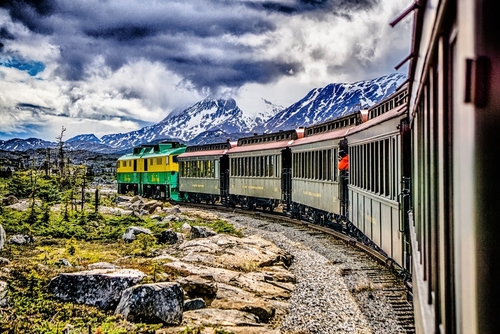
White Pass and Yukon Route Railroad. Travel along the gold rush route and enjoy amazing views of the rugged Alaskan countryside aboard this historic narrow-gauge railroad. As you chug along the rails, you will enjoy historic and informative narrative, along with jaw-dropping views of soaring cliffs, craggy mountain peaks, lush forests, crashing waterfalls and much more.
The 40-mile White Pass Summit excursion lets you enjoy all of this breathtaking scenery in a 2.5 hour journey. Other, often lengthier options are also available. You can upgrade to a package that includes food and beverages.
The departure and return point is at the company's office located in downtown Skagway, just a 10 minute walk from the cruise terminal. Tickets are $155 ($77.50 for children) and should be purchased in advance on the company website.
Open: 7:15am - 5pm
Corrington's Museum of Alaskan History. This interesting historical museum, located in the beautiful Golden North Hotel building, tells the history of the native peoples, as well as the town itself. A truly fascinating highlight is the 40 exquisitely carved walrus tusks, decorated with an art known as scrimshaw. There are also many artifacts dating to pre-historic times.
The museum and attached buildings also offer for sale a variety of local arts and crafts. Entrance is free, but donations are encouraged.
Open: 9am - 4pm
Klondike Gold Rush National Historical Park Museum. The National Park system maintains over 20 historical buildings in Skagway, four of which are museums open to the public. All of them are worth a visit to learn more about that frenetic time period and the people who were key figures.
Admission to the museums is free, but some require a ticket as entrance is limited. Tickets can be obtained at the National Park Visitor Center, which is located at 520 Broadway in downtown Skagway.
Open: The Visitor Center and the four museums are open from 9am - 4:30pm.
Visitor Center Museum. Here you can smell, hear and feel your way through the gold rush days through a variety of informative and interactive exhibits. You can choose your route through the various gold fields and mines and learn whether your chosen path left you rich or a pauper.
Moore House Museum. Visit the tiny William Moore homestead, the first cabin constructed in Skagway in 1887. Next door is his larger home constructed shortly thereafter. There are exhibits featuring the family, frontier life in Skagway and more. There is a quiet outdoor area where you can sit and relax.
Jefferson Smith's Parlor Museum. Jefferson "Jeff" Smith was a prominent local figure who thrived as a conman and the leader of the town's loosely-organized network of criminals. His nefarious dealings and shenanigans live on in local lore. He met his fate at the end of a gun in a famous shootout with town hero Frank Reid.
This fun museum tells Smith's story, as well as Skagway's, through a variety of artifacts, exhibits, folk art, unusual taxidermy and animated mannequins. Tickets -- which are free -- are limited and available at the Park Headquarters.
Mascot Saloon Museum. Once the longest-running saloon in Skagway, the Mascot closed during prohibition in 1916. It has been lovingly restored and provides an authentic glimpse into one of the town's most prosperous and popular watering holes. Exhibits concentrate on the vices of the day and the scoundrels who participated.
Arctic Brotherhood Hall. The Arctic Brotherhood, a fraternal order of Alaska and Yukon pioneers, constructed this uniquely odd building with over 8,800 pieces of driftwood and flotsam scavenged from the local beaches. Built in 1899, the building now home to the Skagway Convention and Visitors Bureau. It is worth stepping inside to grab maps and informational brochures for the town.
Open: 8am - 5pm
HIKING
There are dozens and dozens of trails that originate in or around Skagway. All offer the opportunity to get into the Alaskan countryside and enjoy its unparalleled scenery. You may even spot some wildlife. However, this is bear country, so please be aware of your surroundings and carry bear spray. Make sure you visit the Skagway Visitor Center to secure maps of the available hiking trails.
For a more informative and safer option, consider reserving a guided hiking tour through one of the outfitters. Packer Expeditions offer a variety of hiking options, including hikes to Laughton Glacier and others that include train and/or helicopter rides. You can learn more about their offerings at their website.
ICY STRAIT
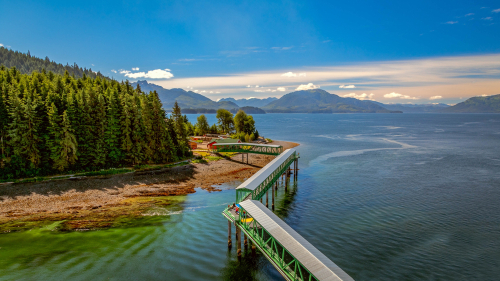
Icy Strait Point is a native-owned developed community adjacent to the small Tlingit town of Hoonah. Its remote and beautiful setting became home to the Tlingit peoples in 1754 when advancing glaciers forced them from their native homes in the Glacier Bay area. Today, Hoonah has about 800 residents, the vast majority being natives.
The development of Icy Strait Point was done to help preserve the local culture, history and some structures. It became cruise-ship focused and caters to tourists. It is estimated that 50% of nearby Hoonah's commerce is tourist related.
Visitors will be able to learn about the local heritage, history and culture, as well as experience the town's magnificent outdoor setting. Keep reading to discover several items of interest that you may enjoy.
Historic Salmon Cannery & Museum. Fishing has been a major occupation and industry in this area since time immemorial. This museum is located inside a preserved 1912 processing facility. Inside, you will learn about the history of the salmon industry and view machinery and equipment from the plant's processing days, which ended in 1953.
The museum is free, but donations are encouraged. It is located just a few steps from the cruise terminal and there are numerous shops selling native crafts in the area.
Open: 8am - 5pm
Huna Tribal House & Dance Show. If you are interested in the history and culture of the native Tlinget, you may be interested in this performance that tells their story via storytelling and dance. The costumes are vibrant and colorful, and reflect the history of their culture. While reviews of the performance are generally good, some feel the production was lacking. Your mileage may vary.
The performances, which are timed to coordinate with the cruise ship arrivals, are held at the Native Heritage Center Theater. Walk-up tickets for the one-hour show cost about $25.
Sky Peak Gondola. This glass-enclosed gondola soars you 1,500 feet to the top of Hoonah Mountain. As you cower in the gondola, try to enjoy the stunning views of Glacier Bay and Tongass National Forest.
Once at the top, there are a few hiking trails, one leading to a mountain hike. There aren't many food options, with a food truck operating during peak season.
For the even more adventurous, you can zip-line down the mountain on the ZipRider. You will reach speeds of up to 60mph as you soar 300 feet above the forest. While tickets may be available at the site, they often sellout due to cruise ship excursions. If you are interested, you should check the available cruise line excursion options.
The cost for the Sky Peak Gondola is about $50, which includes unlimited rides. While on a clear day the views can be exquisite, many folks have commented on social media sites that there is not a lot to do once atop the mountain, making the $50 price tag questionable.
Open: The Gondola's opening hours align with the scheduled arrival times of the cruise ships. Generally, it is open from 8am - 9pm.
Hoonah. This small Tlinget village is a pleasant 30 minute stroll along the scenic coastline. While Icy Strait Point is mostly a manufactured site for cruise line tourists, Hoonah is an authentic village. There are a variety of small shops selling mostly local crafts and souvenirs, as well as a few eateries.
The true highlight, however, is not necessarily the village, but rather the pathway. The scenery is gorgeous, and it is quite common to spot eagles, seals and even whales. The path is about 1.5 miles each way and is mostly level. You can reward yourself with a snack and beverage once you reach Hoonah.
KETCHIKAN
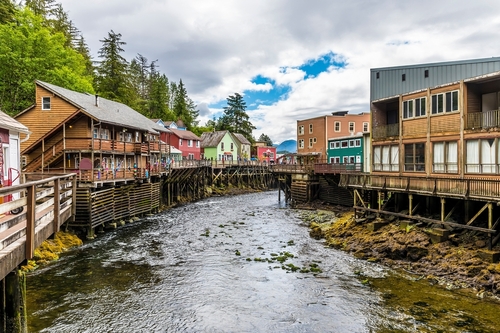
Ketchikan will give you the real feel of an Alaskan frontier town. Colorful wooden houses line the coast and streams, and cascade up steep hills. Native totem poles give testament to the city's indigenous population and their rich history and culture. The fishing and timber industries still thrive, and their presence is readily apparent. Add to this the surrounding mountains, seemingly endless bodies of water and teeming wildlife, and you are given a vivid testament of Alaska.
The area that is now Ketchikan was originally a fishing camp for the native Tlinget peoples. In 1885 Mike Martin was sent by an Oregon canning company to assess the prospects for developing the area. The prospects were good, and the town steadily grew. It is still small, though, with a population of just over 8,000.
While other traditional industries still thrive, the area is now largely devoted to tourism. The downtown area, which is filled with boutiques, restaurants and watering holes, thrives during cruise season. There is a large and vibrant arts community, with shops and galleries displaying their wares and offering them for sale to the tens of thousands of visitors. While most attractions can be reached easily by foot, be prepared to make some steep climbs, as the town is quite hilly.
Note that Ketchikan operates a free shuttle that loops around the downtown area and includes stops at popular sites such as Totem Heritage Center and Tongass Historical Museum. The shuttle, which runs every 20 - 30 minutes, can be caught at Berth 4 on the cruise ship docks.
Get ready to be enthralled by the frontier spirit!
DOWNTOWN
Creek Street. Once the town's notorious red-light district, the houses of ill-repute have now become unique boutiques, shops, restaurants and bars. The colorful buildings are connected by a wooden boardwalk and line Ketchikan Creek, which has numerous footbridges where visitors can often view salmon and trout as they make their way upstream. Be careful, though, as there are often sea lions and other animals in the area, attempting to grab the elusive fish and enjoy a meal.
Creek Street is a short 15-minute walk from the cruise dock. The path is mostly along the coast, so you will enjoy outstanding views along the way. You will also pass by what is known locally as "The Rock". This is bronze sculpture by local artist Dave Rubin depicts seven life-size figures from Ketchikan's history. The sculpture is located next door to the Ketchikan Visitors Bureau, where you can pick-up brochures on local attractions, including a complete listing of public art and their locations throughout the town.
Open: Shops are typically from 9am - 5pm. Restaurants remain open later.
Salmon Ladder. Sometimes wildlife need a bit of help. The friendly folks of Ketchikan constructed these concrete steps to help the fish navigate around the dam and waterfall. There is a free observation deck where you can view the leaping salmon.
For those who want to learn more about the salmon and stretch their legs a bit, there is a 1.5 mile Salmon Walk that wanders along Ketchikan Creek. You will enjoy wonderful views of the creek and town, and pass several other sites along the way. You can view a very handy and informative interactive map at the Salmon Walk website.
The Salmon Ladder is a 15 minute walk from the cruise dock and adjacent to Creek Street (listed above).
Open: 24 hours
Totem Heritage Center. The closest place to view the intricately carved totem poles masterfully created by the native peoples is at the Totem Heritage Center. Over 30 totems are on display, as well as dozens upon dozens of other items, including artwork, clothing, baskets, carvings and photographs. You can wander the museum on your own, or join a guided tour.
The museum is located about a 20-minute walk from the cruise dock. It is also on the Salmon Walk pathway described above. Admission is $7, with discounts for seniors and children.
Open: 8am - 5pm
FURTHER AFIELD
Alaska Rainforest Sanctuary. Get out into the Alaskan wilderness a bit more safely at this nature sanctuary. This private reserve is frequented by bears, bald eagles, seals and other wildlife. You will enjoy numerous viewing opportunities along the 1 1/4 hour hike, led by a local naturalist guide. You will learn about the wildlife and flora, as well as local history and culture.
At the conclusion of the hike, you will tour the 70-year old sawmill and enjoy a local totem pole carver at work.
Adventurous sorts can fly high above the forest along the Kawanti Adventures zip line. This course features a series of zip lines, connected by in-the-sky boardwalks and suspension bridges. One of the zip lines is a breathtaking 130 feet above the ground and 800 feet long. These thrills don't come cheap, though, as the price is $225 for adults. You will want to reserve this in advance on the company website.
Transportation is provided from Ketchikan to and from the sanctuary. While onboard, you will learn about the area as you enjoy the surrounding scenery.
You must reserve a tour in order to visit. Numerous companies offer tour packages, including the reputable Alaska Shore Excursions. Tours typically cost $110 for adults (half for children), which includes the transportation.
Open: 9am - 5pm.
Totem Bight State Historical Park. While there are numerous locations to see the iconic totem poles, perhaps none provides such a beautiful setting. At the Totem Bight State Historical Park you will wander along lush forested paths in an actual rainforest and view over a dozen masterfully carved totems. You are likely to spot some wildlife as well, as the area is frequented by bears (both black and brown), deer, bald eagles and even wolves.
Another highlight of the park is the hand-hewn Native clan house. The elaborately carved structure is a recreation of a native group home, which would have housed up to 50 people.
The park is located about 10 miles north of Ketchikan. Fortunately, the local Silver Line North bus whisks you from downtown to the park in about 20 minutes. The bus can be caught at the shelter at Front Street (near Dock Street). The bus runs every hour (see schedule HERE) and costs $2 each way. Exact change is needed.
There are restrooms at the park, but no food or drink options. You should bring some water and snacks. There is a modest $5 entrance fee.
Open: 6am - 10pm
Potlatch Totem Park. Want more totems? Right next door to Totem Bight State Historical Park is Potlatch Totem Park, a privately owned park that features dozens of native-carved totems lining a peaceful, forested path. There are also recreations of native dwelling and a carving house, where you can watch masters at work. Strangely, there is also a collection of vintage automobiles, which doesn't seem to fit the theme.
The entrance is free, but donations are welcome. The park can be reached using the same bus line used for reaching Totem Bight State Park (see above).
Open: 9am - 5pm
VANCOUVER
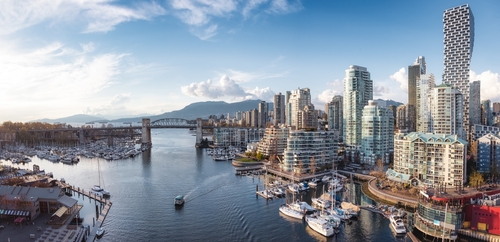
Located on the Strait of George, an inlet from the Pacific Ocean, Vancouver is Canada's third largest city and its most ethnically and linguistically diverse. Nearly 50% of its people are not native English speakers. Mandarin, Cantonese, Korean and Punjabi are major languages you will here, as the city has large populations from those countries. Of course, this diversity also means you will enjoy a wide range of architecture, culture and food.
Indigenous peoples have lived in the area for over 10,000 years. Modern settlement began in 1867 near a tavern that was constructed near Hastings Mill. The mill was owned by John Dayton, known locally as "Gassy Jack". Indeed, the growing town was originally named Gastown in his honor.
Vancouver was originally a logging town, and the arrival of the Canadian Pacific Railway opened it to more settlers. It became a stopping point for gold prospectors, and a variety of merchants found success in outfitting these wealth-seekers. Natural resources dominated the economy for over a century. Today, while natural resources remain a vibrant part of the economy, Vancouver has thriving technology, film and television, and tourism industries.
Many visitors to the city are bound for the surrounding wilderness, with the Coast and North Shore Mountain ranges a major destination for hikers and winter sports enthusiasts. The downtown and surrounding area has much to offer, however, including scenic parks, bustling markets, a thriving art scene, and enticing ethnic neighborhoods.
Exploring Vancouver is a great way to end your cruise adventure. Let's see what you can see and do!
Stanley Park. After a week at sea, it is time to get your legs underneath you! The best way to do this in Vancouver is to stroll the beautiful, 1000 acre park and rainforest. The park has over 17 miles of trails that wander through the rainforest, where you can often spot the local wildlife, including beavers, eagles, herons and more.
Along the seafront there are several beautiful beaches where you can relax, soak-up some sun and frolic in the chilly waters. Second Beach is located next to a public heated pool and offers public restrooms, changing facilities and concessions. Third Beach (couldn't they have thought of more clever names?) is quieter, being surrounded by trees that help block much of the urban noise. The sandy beach also offers concessions and changing facilities.
Scattered throughout the park are several historical landmarks and monuments, including a collection of native totem polls. There are ample places to rest and/or grab a bite to eat.
Vancouver Aquarium is also located in the park. This major attraction features over 65,000 animals, including sloths, otters, sea lions and, of course, fish. Ticket prices vary by day and range from $42 - $56. The aquarium is generally open from 9:30am - 5pm, but times do vary, so check the website for the exact times.
The park can be reached by an easy 30-mintue stroll from the cruise terminal or a short 20-minute bus ride. Note that the park is large and requires a lot of walking. Bring some water and take advantage of the many resting spots.
Open: 6am - 10pm
Granville Island. This is a Vancouver hot spot, with a vibrant public market, dozens and dozens of shops, art galleries, studios, restaurants, cafés, live entertainment and even a large children's zone. There are also two parks on the seafront where you can relax and enjoy the views, which may include bald eagles, sea lions and whales.
The island is easily accessible by foot, vehicle or Aquabus ferry. The ferry provides service to numerous places along False Creek, so you can use it to visit various sites and attractions.
Open: The Public Market is open 9am - 7pm, as are most shops. Restaurants remain open later.
Gastown. Step back in time in this vintage neighborhood that features cobblestone streets, early 20th century brick buildings and one of the few steam clocks in the world. The neighborhood has many unique shops and boutiques, as well as restaurants where you can enjoy all types of cuisine.
As one might expect for a neighborhood that grew-up around the original Vancouver tavern, there is a healthy supply of bars and watering holes, many boasting fanciful twists on familiar cocktails.
The neighborhood is easily reached via public transportation. Shops are generally open from 10am - 6pm, with restaurants and bars open later.
Capilano Suspension Bridge Park. Do you have a fear of heights? Even just a little? If so, stay clear of this 460' long, slightly unnerving swinging bridge that soars 230' above the canopied forest floor. Overcoming your trepidation will be worth it, though, as the views are spectacular!
The suspension bridge is part of a 27 acre park where you can wander along walkways that take you through the lush rainforest and along towering cliffs. History and culture are also on display, with many native artifacts, arts, crafts and totem poles on display.
Don't worry about getting hungry, as there are several dining options within the park, including the Cliff House Restaurant & Bar.
The park is located about a 20 minute drive (40 minutes via public transportation) north of Vancouver.
Admission to the park, which includes all attractions, is $76.95, with discounts offered for seniors and youth.
Open: 8:30am - 5pm