WHAT AM I GOING TO SEE AND DO?
So what are you planning on doing at our many exciting ports-of-call? Even if you are joining us for our small group excursions, you will likely have some additional free time to explore these fascinating locations.
If you are trying to decide what to do, this page is for you! You will find information about exciting and fun things to see and do at each port-of-call. History, culture, art, food ... whatever you are interested in, you will find details of attractions, activities and sights that will satisfy your interests and provide lifelong memories.
Check out the options below and get ready to enjoy the adventures that await!
- BARCELONA - MALLORCA - CARTAGENA - THE AZORES - BERMUDA
BARCELONA
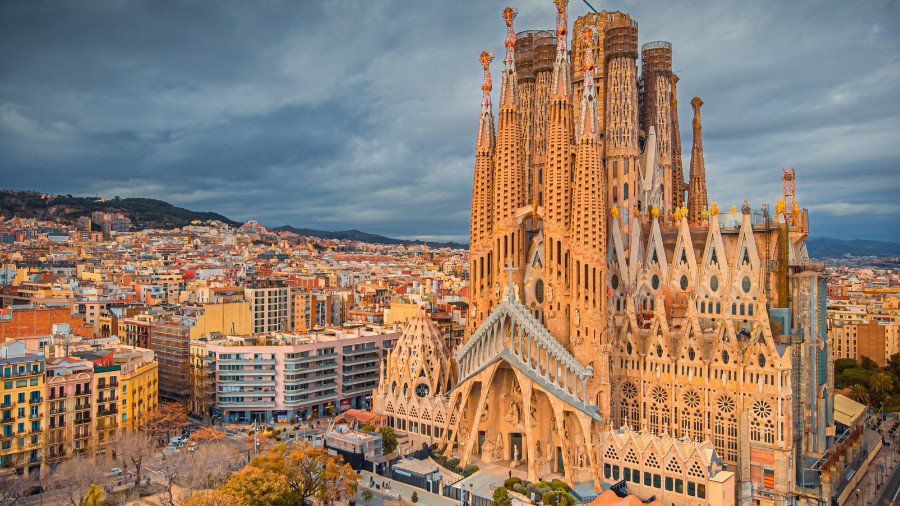
Barcelona is a magical city that combines history, art, culture and food in an irresistible mix. There is so much to see and do here, it is no wonder that it is one of the world's most popular tourist destinations.
Founded over 2000 years ago by either the Phoenicians or Carthaginians (scholars still aren't quite sure), Barcelona is Spain's second-largest city and the capital of the Catalonia region. It sits on the Mediterranean Sea, providing visitors with the opportunity to take a break from exploring the rich history of the city to relax on the beach, listening to the waters lap at the shore.
Barcelona has it all, from ancient history to eye-bending modern art. Whatever your fancy, you will find it here. Read on to discover just a taste of what there is to see, do and experience.
NOTE: Travel guru Rick Steves offers two free audio walking tours of Barcelona. I am a huge fan of Rick (perhaps even obsessed!) and can heartily recommend his audio guides. You can download them HERE.
Sagrada Familia. The Sagrada Familia is renowned architect Antoni Gaudi's masterpiece. Construction began in 1882 and is still ongoing today. There simply is no other cathedral like it anywhere in the world. You can spend hours upon hours admiring and studying the wild, untamed and intricately carved exterior, while the elaborate and mind-twisting interior is equally magnificent. When I visited, I was left speechless upon entering the cathedral, where I experienced the celestial display of lights streaming through the stunning stained glass windows.
The Sagrada is Spain's most popular tourist attraction and it second only to St. Peter's Basilica in Rome in terms of the most popular church in Europe for visitors. As such, it is absolutely imperative that you reserve your tickets in advance. You can purchase your tickets HERE.
To enhance your visit, don't forget to utilize the audio guide that is generally included with your ticket. Make sure you have ear pods or a headphone to use with your phone. There is also a ticket option that includes a private guide.
Open: Monday - Friday, 9am - 7pm; Saturday, 9am - 6pm; Sunday, 10:30am - 7pm
Park Guell. Designed to be an upscale community by the creative and somewhat eccentric architect Antoni Gaudi, Park Guell showcases his wild and untamed brilliance. Strolling around the 30 acre park will expose you to his genius, including elaborately decorated fountains (including a whimsical smiling dragon constructed of tile), grottos, a pathway of impossibly curved columns and more. Relax on the tile benches of the massive terrace and enjoy views of Barcelona.
While the planned community never came to fruition (only two homes were completed), Park Guell is still a sensory delight and gives you the opportunity to feel like a child in an adult playground.
It is highly recommended that you purchase your timed tickets in advance. Click HERE to purchase your tickets.
Open: Every day, 9:30am - 7:30pm
Block of Discord. Can't get enough of Antoni Gaudi? Visit the "Block of Discord" to view and explore three of his wildly inventive creations: Casa Battló, Casa Amatller and Casa Lleó Morera. All three are located on Passeig de Gracia, which has a convenient Metro stop of the same name nearby. The buildings reflect Gaudi's unique take on the Modernista architectural style. Two of them are open for visitors, and you will be challenged to find a straight line in any of them!
In my opinion, the best one to visit is Casa Battló. There is an abundance of outlandish architectural features, and the other-worldly rooftop offers great views of the neighborhood. Tickets can be purchased HERE.
Open: 8:30am - 10:30pm
Barcelona History Museum. If you enjoy history, don't miss this museum, which is in large part the result of archaeological excavations. Barcelona was originally a Roman city, founded by Emperor Augustus around 10BC. There are still remnants of the old Roman city, if you know where to look. One of the best places to discover Roman Barcelona is in this museum.
Go sixty-five feet down and 2000 years back in history to view the ancient Roman streets. The area you will be exploring was an active working-class neighborhood, so you will see the remains of areas that were used for laundering and dyeing clothes, processing fish and seafood and even a wine-making facility. You can feel and see history all around you.
Your path will lead you through the centuries where you will see the remains of a 7th century Christian church, remnants of the Visigoth civilization and an 11th century bishop's palace. Your journey will end in Tinell Hall, part of the Royal Palace, which has relics and artifacts from medieval times on display.
The museum is part of numerous historical sites and is located on Plaça del Rei in the Gothic Quarter.
Open: 10am - 7pm (Closed on Monday)
Picasso Museum. Even if you are not a big art aficionado, it is worth visiting the Picasso museum to see what the fuss is all about. Pablo Picasso is a Spanish icon and is known throughout the world, primarily for his ground-breaking (and vision warping) Cubist artwork.
Picasso spent 9 years in Barcelona during his teens and early 20s. At the time, he was a realist painter, and a highly skilled one at that. However, he was called in a different direction, and the result greatly shook the art world. The art is largely displayed in a chronological fashion, so you get to see how his works progressed from realism to, well, bizarre cubism. The museum boasts the most comprehensive collection of the artist's works in Spain.
The museum is understandably popular, so it is wise to purchase tickets in advance. You can do so HERE.
Open: 10am - 7pm (Closed on Monday)
Barcelona Cathedral. Dominating the Gothic Quarter skyline is the Barcelona's impressive Gothic cathedral (Cathedral of the Holy Cross and Saint Eulalia), with its three ornately carved spires soaring towards the sky. The cathedral sits on the original site of the Roman temple honoring the god Jupiter. Subsequently, there have been several churches and cathedrals occupying this location. Construction on the present gothic masterpiece began in 1300 and was completed in 1450.
My wife and I are both enamored by gothic architecture and there is so much to discover and admire here, especially on the facade. Spend time exploring the exterior, where you will spot intricately carved saints, angels, gargoyles and grotesques. An interior visit is also recommended, where you will enjoy the rich stained glass, 28 small side chapels, the crypt containing the tomb of Saint Eulalia, and serene cloister. I also recommend climbing to the rooftop, where you will get an up-close view of the rich carvings, as well as a lovely view over the Gothic Quarter.
Purchasing tickets in advance is not usually necessary, but you can do so HERE.
Open: Monday - Friday, 9:30am - 6:30pm; Saturday, 9:30am - 5:15pm; Sunday, 2pm - 5pm
Santa Caterina Market. The market the vast majority of tourists visit is Boqueria Market, which is located on the extremely busy and touristy La Ramblas avenue. On many days, it is nigh impossible to get inside, as it is jam-packed with tourists. My suggestion is to avoid the crowds and visit the far-less touristy and decidedly less expensive Santa Caterina Market, which is located in the Gothic Quarter just a short walk from the Barcelona Cathedral.
The Santa Caterina Market was constructed on the ruins of a Dominican monastery. The 2006 renovation gave the building an appealing Gaudiesque appearance. While the architecture is eye-catching, what's inside is far better: delicious food at reasonable prices. You can enjoy snacks, tapas, wine, beer and/or a full meal. If you aren't hungry, you will be, as the enticing aromas permeate the market and are sure to get your tummy grumbling. This is an excellent place to stop for a snack, drink or meal while you are exploring the Gothic Quarter.
Open: Monday, 7:30am - 2pm; Tuesday, Wednesday & Saturday, 7:30am - 3:30pm; Thursday & Friday, 7:30am - 8:30pm. Closed on Sunday.
The Ramblas. Yes, it is touristy. Yes, it is crowded. Yes, there are tacky souvenir shops. Still, strolling this famous avenue, which stretches from the Columbus monument located on the coast to the spacious Placa de Catalunya, is a Barcelona tradition.
The 1.2 kilometer long avenue is lined with restaurants, shops, monuments and the famous Boqueria market. Most of the shops and restaurants cater to tourists, which usually means high prices, low-quality food and merchandise, and large crowds. When you are hungry or want to shop, I would recommend heading to the side streets, where you will find much better and more authentic cuisine and merchandise.
Still, there are some interesting and historical sites to see while strolling. Look for the black and gold Fountain of Canaletes, the shallow balconies (which remind me a bit of New Orleans), colorful flower stands and the monument to Christopher Columbus near the coast. If you enjoy history, take a 100-yard detour along a modern passageway adjacent to the modern Citadines Hotel to view the restored Roman Necropolis, which was the site of the ancient Roman cemetery.
To better enjoy the Ramblas with less crowds, my suggestion is to stroll along it in the morning. Take time to sit on one of the benches and watch others stroll by. You are in Barcelona!
MALLORCA
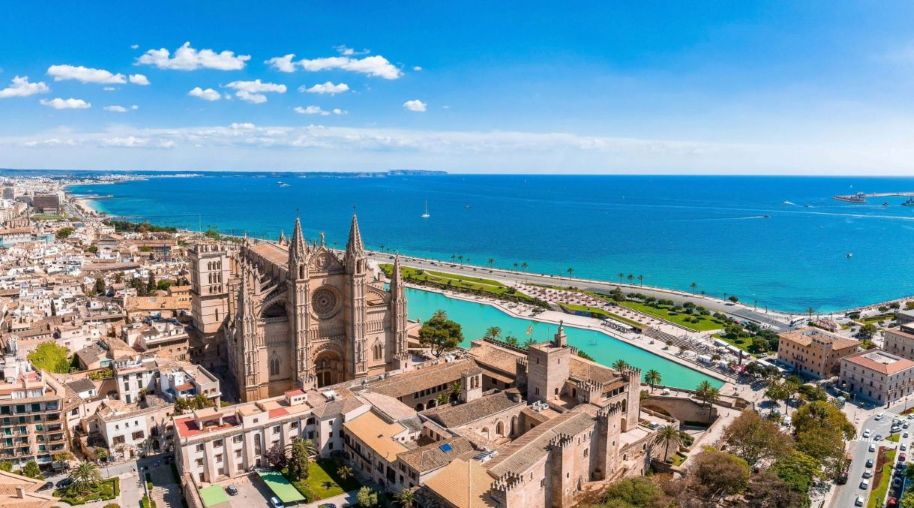
Palma de Mallorca is old ... ancient, even. Even before the Romans arrived in 123 BC, there was a bronze-age settlement dating back over 3500 years. But the city is even older, as there is archaeological evidence of people living in the area in the 4th century BC. The arrival of the Moors in the 9th century transformed the city with the unique Islamic and Moorish architecture. The Moors were expelled from the island over 300 years later and the Christian era was reestablished. It was then that the magnificent La Seu cathedral was constructed, and it still dominates the city's skyline and remains the major tourist attraction.
Beginning in the 15 century and continuing for hundreds of years, Mallorca was frequently raided by pirates. This explains the many defensive fortifications that are still present today. The most prominent of these structures is Bellver Castle, Spain's only circular castle.
Most of this history resides in a compact area within the old city. It is easily walkable in several hours, but you will want to take your time to stop in local cafes to sample the delicious local food and taste the local liqueurs. Don't miss trying an Ensaimada, a puffy, spiral-shaped pastry with a dusting of powdered sugar. Reminds me of a beignet from Cafe Du Monde in New Orleans!
La Seu Cathedral. The massive cathedral was constructed on the site of a mosque, eventually obliterating all traces of that structure. Its gothic architecture features extensive use of flying buttresses and pinnacles, and the entire structures dominates the old town.
Unfortunately, the interior is closed to visitors on Sunday (which is the day we will be there) due to Catholic masses. Still, it is worth examining the exterior and admiring its architectural features.
Old Town. The magic of Palma de Mallorca is the atmosphere of its picturesque old town. It is a joy to wander the labyrinth of medieval streets and alleys, spotting hidden gems, browsing a few shops, and enjoying a beverage and snack at a small cafe. Don't forget to try the traditional ensaimada pastry!
If you enjoy shopping, you will lighten your wallet along the "golden mile", the contemporary shopping district. Passeig de Born and Avenida de Jaime III are filled with modern shops occupying centuries-old buildings. Both of these areas are located in the Old Town area.
While tiny, it is interesting to enter the remains of the 11th century Arab Baths. The few small rooms offer a glimpse back in time to when the Moors ruled the island. The ruins are located close to the cathedral.
The Royal Palace of La Almudaina. Dating back to the 14th century, The Royal Palace of La Almudaina is the residence of Spain's king and queen when they visit the Balearic islands. The stoutly-constructed palace, which is located adjacent to the cathedral, has a lavishly decorated interior housing a collection of furniture spanning the ages, an impressive library, a medieval armor assemblage and much more. You can wander the castle and get a glimpse of how royalty lives.
The interior is currently undergoing renovation work, but is scheduled to reopen to visitors by the end of summer.
Open: Tuesday - Sunday, 10am - 7pm
Castell de Belver. This is not the stereotypical European medieval castle. What makes it different? It is round! Indeed, it is the only perfectly circular castle in all of Spain.
Surrounded by massive stone walls and ramparts and complete with three soaring defensive towers, the formidable 14th century gothic castle is a delight to behold. Do go inside and wander the castle grounds and courtyard, as well as the kitchen and chapel. Make sure you visit the museum, which contains artifacts from the Roman, Arab and Spanish periods.
The castle is located between the cruise terminal and the city of Palma. Public transportation is available to reach it.
Open: Sunday, 10am - 3pm
Paseo Maritimo. What a great way to experience the beauty of Palma! Stroll along this wide 4-kilometer, palm tree-lined shorefront promenade, enjoying the historic buildings and sights you will pass, as well as the yacht-filled harbor, sandy beaches and peaceful blue waters of the Mediterranean Sea.
While strolling, you will pass through the scenic Parc de la Mar, where a lovely park and lake invite you to relax, enjoy a refreshing beverage and/or tasty ice cream, and watch the passersby.
CARTAGENA
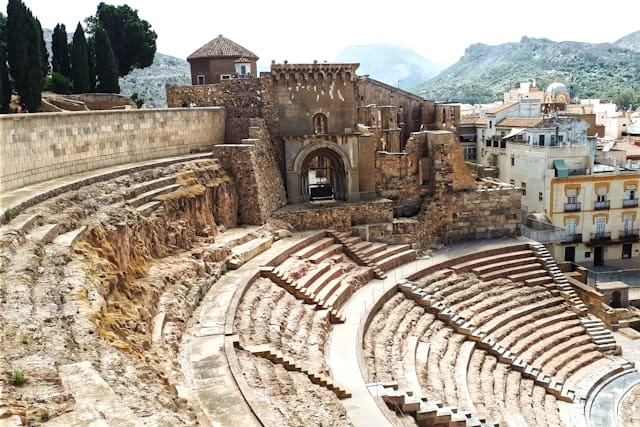
If you enjoy history -- especially Roman history -- you are in for a treat in Cartagena! Founded around 227BC by the Carthaginians, a civilization that became perhaps Rome's greatest rival, the city truly flourished under Roman rule. There are numerous vestiges of this time period, including the largely intact Roman Theater and the extensive Roman Forum, both of which are must-see sights.
But Cartagena's history isn't confined to the Roman era. The city has also been under the sway of the Moors, the Byzantines and, of course, Spain. You can visit many locations that reflect the influence of these cultures, including Concepcion Castle.
In addition to its impressive historical sites, Cartagena also offers intriguing shopping opportunities, fascinating museums, relaxing beaches and some of the best food in Spain. Make sure you find a small cafe or bar and sample some of the delicious tapas!
Roman Theatre. The glory of Rome is on display in the largely intact remains of the Roman Theatre. Built between 5BC and 1BC, the theatre was a cultural centerpiece for Cartagena's citizens for over two centuries. After a devastating fire, it was mostly abandoned, and for nearly two millennia it was left to crumble and deteriorate. Major excavations and restoration was conducted in the late 1990's and early 2000's, and the theater emerged to once again be an iconic symbol of the city.
Unfortunately, the theatre and museum are closed on Mondays, but you can easily view nearly the entire structure from the nearby park and surrounding streets. It is well worth stopping to examine the theatre and think about what exciting plays and events occurred here over 2000 years ago.
Roman Forum. Every Roman city had a forum, which served as the marketplace for the city's citizens. All types of goods and services were offered -- fresh seafood, clothing, washing, beverages, pots & pottery ... you name it -- and all types of business was conducted. It was the equivalent of the modern-day shopping area (I would say "shopping mall", but they are sadly no longer popular).
After being buried for nearly two centuries, large sections of Cartagena's ancient Roman forum have been uncovered. While the museum and interior is closed on Mondays, you can view some of the extensive remains by strolling adjacent streets (Via dei Fori Imperiali and Piazza del Campidoglio are ideal for this) and reading the numerous historical information boards. Again, take time to imagine the hustle-and-bustle of business and recreational activity that occurred here for centuries. Are we really that different from the folks who lived here thousands of years ago?
Calle Mayor. One of the favorite traditions for Spanish citizens is the "el paseo", which translates loosely to "taking a walk". Just about every late afternoon citizens of towns and cities leave their homes and stroll along their town's main thoroughfare or pathways. It is a friendly, social activity where folks chat, hug, window-shop and, of course, snack and drink.
What makes the Calle Mayor extra-special is the beautifully preserved 19th and early 20th century Art-Nouveau buildings lining both sides of the wide, blue-tiled avenue. You will ogle over the ornate Casa Cervantes and stunning, mosaic-tiled Casa Llagostera. Indeed, it would be best to stop by a local cafe or bar to enjoy the city's best tapas while you admire the gorgeous buildings.
Concepcion Castle and Park Torres. Situated on the highest hill in Cartagena, Conception Castle and the adjoining Park Torres offer outstanding views over Cartagena and the Mediterranean Sea. While the interior of the castle is closed on Mondays, the views of the city and the peaceful, park-like setting are worth the climb. If you are in luck, you may just spot some of the native peacocks that enjoy wandering the park!
What remains of the 13th century castle, which was constructed on the site of previous fortifications, is the keep, which still stands today. While admiring the incredible views over the city and sea, make sure to turn around and appreciate the significance of the castle and its importance to the defense of the city.
NOTE: The castle and park are about a 10 - 15 minute walk from the cruise terminal. There is a fairly steep 150 foot climb to the park, so make sure you are in decent shape and wear comfortable shoes.
Open: All day
Cala Cortina Beach. Just a short 8 minute drive from the cruise terminal is Cala Cortina, a beautiful beach with tranquil blue waters and surrounded by dramatic cliffs. Toss in a cozy beach bar where you can enjoy a refreshing beverage and perhaps a tapas or two and you have the makings of a perfect beach day!
Cala Cortina is regularly ranked as one of the top beaches in Spain. It is located near the St. Lucía neighborhood, yet feels isolated due to being surrounded by towering cliffs. After soaking up the sun and frolicking in the sea, stop by the popular Mares Braves restaurant and try some of their unique food. Squid tapas, anyone?
You can reach Cala Cortina by an 8-minute taxi ride from the cruise terminal, or you can trek about 45 minutes along the Blue Trail, which begins at the Yacht Club, located by the cruise terminal. The scenic path leads along the coastline, offering wonderful views of the sea and city. You will also pass the old fishing port, the lighthouse of La Curra and the military batteries guarding the port's entrance.
Open: 24 hours
THE AZORES
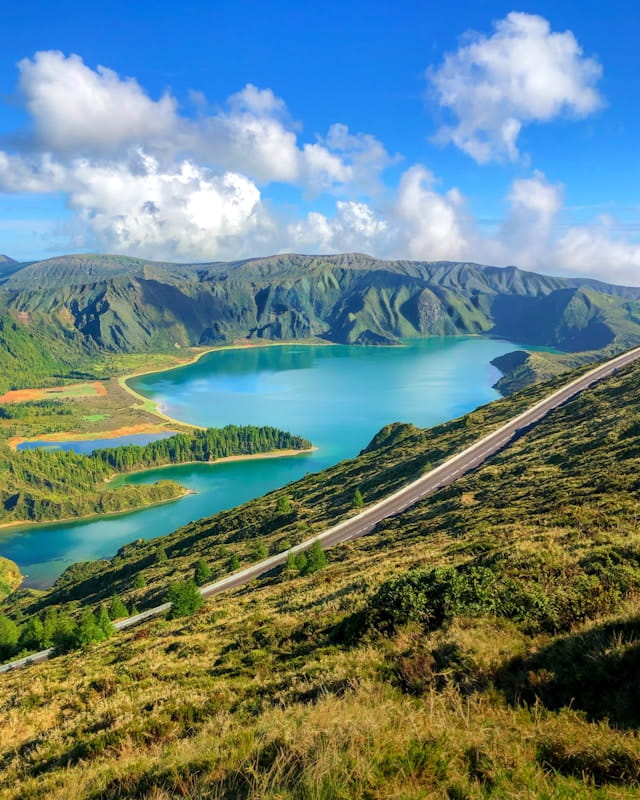
Located 900 miles west of the mainland of Portugal, the nine volcanic Azore islands are often called the "Hawaii of the Atlantic". The mountainous islands are filled with roaring waterfalls, black sand beaches and inviting coves and bays. The island's capital of Ponta Delgada, which is located on São Miguel island where we will dock, contains rich Portuguese history that is worth exploring.
Archaeological evidence indicates the islands were likely occupied nearly 2000 years ago, but the island's true flourishing came once the Portuguese "discovered" and settled the island in the early-to-mid 1400s. For centuries, fishing and agriculture were the islanders' main occupations, but tourism became a major income-driver in the late 1900s and into present.
While the capitol of Ponta Delgada is a short walk from the cruise terminal, to explore the mountainous countryside you will need to join a tour or rent a vehicle, which is quite easy and reasonable. Public transportation into the countryside tends to be infrequent.
NOTE: There is still space available on our "Chasing Waterfalls" small group excursion. We will take several short and scenic treks to marvel at various stunning waterfalls, where we can refresh ourselves in the cool mountain waters and enjoy a picnic lunch. You can reserve your spot on this excursion HERE.
IN THE COUNTRYSIDE:
Sete Cidades Lake. These are actually side-by-side twin lakes, each a contrasting color! One of the lakes is emerald green, while the other is royal blue (remember those colors from your childhood box of crayons?). The lakes are picturesquely situated inside the crater of an dormant volcano and surrounded by lush green forests and hills.
Hikers will enjoy trekking around the crater on the 7.7 mile Rim Trail, while water enthusiasts can rent kayaks or paddleboats to enjoy the lake's calm waters and stunning views.
The lakes are located about a 30-minute drive from Ponte Delgado.
Furnas Lake. Beautiful Lake Furnas is located in a volcanic caldera and surrounded by lush forests and incredible geothermal activity. Those who have visited Yellowstone National Park will have those memories revived as you stroll past boiling springs and fumaroles, listing to the bubbling sounds of the boiling water all around you. At Noonish, you can witness local restaurant staff remove pots of slowly-cooked meats and vegetables that form the traditional Azorean stew, which have been slowly cooking in the boiling waters for six or more hours. You can enjoy the stew at numerous restaurants in the town of Furnas.
An easy and mostly level 5.5 mile hiking trail loops around the lake and provides numerous outstanding viewpoints. On the eastern edge of the park, the recently opened Grena Park features numerous waterfalls, thick forests and terrific views of the lake. There are several trail options, some of which can be lengthy and/or rugged. There is an admission fee (about €10), and the park is open from 9:30am - 6:30pm.
You can also visit Parque José do Canto, a historic botanical garden created in the 19th century. The manicured park features exotic plants, serene pathways, a waterfall and a neo-Gothic chapel. It is a great place to commune with nature in a peaceful setting. There is a €5 admission fee. The park is open from 10am - 6pm.
Ponta da Ferraria. Located on the wild, ruggedly beautiful western coast of the island, Ponta da Ferraria is unique in that it is where the seawater meets geothermal hot natural spring water. This creates a natural spa where visitors can soak in the warm waters while they ogle the awe-inspiring rugged terrain and cliffs.
Note that it is best to soak in the waters at mid-to-low tide, as the waters will be warmest. Also, make sure to bring aqua shoes as the terrain is extremely jagged and rocky.
The 40-minute drive to Ponta da Ferraria is along the coast and passes through several small, quaint villages. Allow a bit of extra time to stop for scenic overlooks and to stroll through a village or two.
Chá Gorreana Tea Factory & Plantation. If you are a tea afficionado, a visit to the Chá Gorreana Tea Factory & Plantation will enhance your knowledge of the tea production process, as well as tantalize your taste buds. In Europe's oldest tea plantation, you will discover the centuries-old Azorean tea tradition, as well as wander the lush landscape and enjoy free tastings of the teas.
Open: 10am - 6pm
IN PONTA DELGADA:
Portas da Cidade. The historic three arched gateways of Ponta Delgada are the iconic image of the city. Originally constructed in the 18th century and moved to their present location in 1952, the image of the arches are on pretty much every postcard you can find in the city. Indeed, they are known locally as "The Doors of the City".
Take time for more than a passing glance. The pillars and arches contain numerous carvings and sculptures, including several coats of arms and depictions of weaponry. The square in front of the arch is a beautiful mosaic constructed of tens of thousands of small stones.
Gruta do Carvão. Formed thousands of years ago by the lava flow from a volcanic eruption, the Gruta do Carvão is an ancient lava flow tube that is remarkable. The spectacular rock formations and geological history will fascinate you and increase your awe of nature's power.
Guided tours begin at 10:30am and are offered every half hour (except 12:30pm) until 4:30pm. A 2 - 3 hour tour is available, but reservations must be made in advance.
The Gruta do Carvão is a short 10-minute drive (30 minutes if using public transportation) from the cruise terminal. Alternatively, you can walk to it in about 45 minutes, passing through old neighborhoods. Stop along the way and visit a local tavern for a beverage and tasty local snack.
Open: 10am - 12:30pm; 2pm - 6pm
Plantação de Ananases A Arruda. Do you enjoy the taste of a juicy, fresh pineapple? If so, you may want to visit Plantação de Ananases A Arruda, a 100-year old pineapple plantation. You will enjoy a free visit and learn how pineapples, which were originally imported from Central and South America, are grown in special white-washed greenhouses, giving them a rich, juicy flavor.
The visit includes complementary pineapple tastings, as well as a tasting of the delicious pineapple liqueur the plantation produces.
The plantation is located on the northeastern edge of town, about a 10 minute taxi ride away. Alternatively, you can take public transportation, which takes less than 20 minutes. It is about an hour walk, but you will be walking through much of Ponta Delgado's old town, which will offer many diversions and opportunities to stop for a beverage and/or snack.
Open: 9am - 6pm
BERMUDA
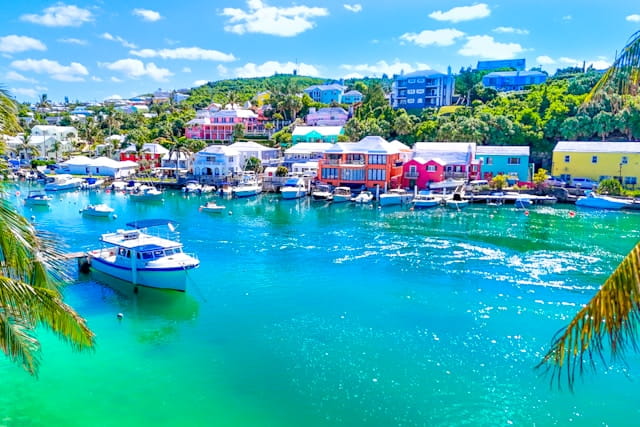
Bermuda is renowned for its beautiful beaches and quaint colonial towns and villages. Hundreds of thousands of tourists flock to the islands each year, most clamoring for a spot on the beaches where they can relax, soak-up the sun and enjoy the crystal clear waters.
Discovered by the Spanish in the early 1500s, Bermuda was first truly settled by the British in 1609. It has been associated with that island kingdom ever since, although it didn't become an official British Overseas Territory until 2002. Semantics, really, as the Brits have controlled the island since its first settling.
Thanks to its early settlement, today we can enjoy a glimpse back in time to the now quaint little colonial towns with their pastel facades and white roofs.
While there is quite a bit to see and do by our cruise terminal -- the Royal Navy Dockyard -- most of the attractions on Bermuda will require public transportation or taxi to reach. You can rent a car, but by law non-residents can only reserve small, two-seater, zero-emission electric microcars. Plus, you'll be driving on the "wrong" side of the road! So, unless you are comfortable with these restrictions, I'd suggest sticking with the alternative modes of transportation.
NEAR THE CRUISE TERMINAL:
National Museum of Bermuda. This is not your normal indoor museum. Rather, this extensive museum is spread across ten acres of historic fortresses. You will get to explore 500 years of Bermudan history as you wander through the forts and examine shipwreck artifacts and relics from the island's history. You can browse through a fully restored Georgian Commissioner's house, studying the various exhibits. The adventurous folk can even schedule an up-close encounter with dolphins!
The museum is located just a short 10 minute walk from the cruise terminal.
Open: Daily, 10am - 5pm
The Clocktower Mall. Enjoy shopping? Let the two prominent clocktowers guide you to the Clocktower Mall, a treasure trove of shops offering everything from beachwear to fine jewelry. You can also taste the local island flavors at the numerous restaurants and bars located in and by the mall.
The building housing the mall was originally constructed in 1856 as a warehouse for the British navy. When that need passed, the building became today's vibrant shopping Mecca.
The Mall is just a short 10 - 15 minute walk from the cruise terminal.
Open: Daily, 10am - 5pm
FURTHER AFIELD:
Hamilton. The island's capital has much to explore. Over 200 years old, the city has maintained its colonial feel, especially along the waterfront. Pastel-colored buildings line the vibrant Front Street, with an array of shops, restaurants and bars ready to tempt you. Don't forget to look seaward and admire the lavish super-yachts, playthings of the rich and famous.
You can get a sense of a different era when Britain ruled the seas by visiting Hamilton Fort. Constructed in 1870, the fort was never needed for defense and the massive 18-ton artillery pieces were never fired. Today, you can explore the fort, enjoy the Atlantic views, and wander through underground passages and dungeon. The former moat is now a lush garden. The fort is open daily from 9:30am - 5pm, and is just a short 15 minute walk from the city center.
Cathedral of the Most Holy Trinity. No matter where I travel, I always enjoy visiting a town's churches and cathedrals. Some are magnificent, soaring works of art, while others are humble abodes where folks can commune with the spiritual. Hamilton's Cathedral of the Most Holy Trinity falls somewhere in between, with beautiful Restoration Gothic architecture and a soaring tower that can be climbed for outstanding views over the city and ocean. The cathedral is open from 8am - 5pm.
Admiralty House Park. For a nearby beach with a secluded feel and lots to explore, Admiralty House Park is perfect! This small beach and park, surrounded by limestone cliffs, was once the site of grand homes for British Naval Admiralty (thus, the park's name). While the stately manors are long gone, what remains are tunnels that once provided a discreet entrance for a presumably naughty admiral.
The adjacent Clarence Cove is overlooked by most visitors, and provides a lovely, usually crowd-free chance to enjoy the turquoise waters and sandy beach without having to muscle for a spot.
The park and beach can be reached by public transportation or taxi in about 10 minutes, or you can stroll to it in just over half an hour.
NOTE: Hamilton is easily reached by ferry, which departs from the Royal Navy Dockyard and in 15 - 20 minutes takes you to the city. Make sure you check the ferry schedule for the current operating times.
Gibb's Lighthouse. Worth a stop if you are captivated by the romance of old lighthouses. Built in 1846, the lighthouse still guides seafarers today. Visitors can climb the 185 spiraling stairs to enjoy lovely views out to the ocean and over the island.
There is a small admission to climb to the top.
You will need to take public transportation or taxi to the lighthouse, which is along the way to the rest of the island if you are not using the ferry system.
Open: 9:30am - 4:30pm
Horseshoe Bay & Beach. Bermuda is known throughout the world for its beautiful beaches and turquoise waters. While there may be a dispute as to which of Bermuda's beaches is the most beautiful, no one will argue that Horseshoe Bay isn't the most popular.
Located near the famous Gibb's Lighthouse (see above), Horseshoe Bay features powdery pink sand, turquoise water and limestone cliffs. And if you desire more than sunning and playing in the surf, there are so many other activities you can enjoy, including boat and jet ski rentals, parasailing and all types of water sports. And you won't go hungry or thirsty, as the popular beach is lined with pubs, bars and restaurants serving tasty temptations.
There are public showers, changing rooms and bathrooms available. Note that that there is a fee for reserving chairs, towels and umbrellas.
Public transportation (Bus Route #7) is the best way to reach Horseshoe Bay, which is about 45 minutes away via bus from the cruise terminal. A taxi ride cuts that time in half.
Jobson's Cove. Just 10 minutes away from the popular Horseshoe Bay is Jobson's Cove. The cove has many of the same features as the more well-known Horseshoe Bay -- pink sand, turquoise waters, frolicking sunbathers -- but also features picturesque (but ankle-twisting) craggy rocks and usually far less people. The Cove is located along a sandy path from the more popular Warwick Long Bay Beach, and its hidden location makes it more secluded. Look for the sandy path to the right of Warwick Long Bay.
Note that there are no public showers, toilets or changing areas in Jobson's Cove. You will need to utilize the ones at Warwick Long Bay.
If taking public transportation, you can use the familiar Bus Route #7. The ride will take about 50 minutes.
St. George's. St. George's is a joy to explore. Located on the far eastern end of the island, it whisks you back in time to when Britain colonized much of the world. Start your journey in colorful King's Square, which contains a replica of stocks and a pillory, devices that were used for centuries to punish wrong-doers.
Founded in 1612, St. George's is the oldest continuously occupied British settlement in the New World. The town is alive with the feel of that era, with cobblestoned streets, Colonial architecture and a fort, all dating to the 17th century. The place is so special that the entire town and surrounding historical sites have been designated a UNESCO World Heritage Site.
Although the church has been rebuilt and expanded throughout the years, some of St. Peter's Anglican Church date back to its original construction in 1620. The impressive stairway leads to the still rather rustic wooden interior, with most of its walls being covered in memorial plaques. The communion table and railings are all constructed of wood that dates back to the founding of the church over 400 years ago. The church is open from 11am to 3pm, and there is a small $2 donation to enter the church.
Fort St. Catherine. Located at the very end of the northeastern tip of the island, Fort St. Catherine is the oldest fort on the island, dating back to 1614. The sturdy exterior walls protected not only against potential invaders, but the raging sea as well. You can wander the fort and explore the battlements, dimly-lit tunnels and passages, hidden chambers and formidable lookout towers. Exhibits display artifacts from the 17th century and explain what life was like for the early settlers. The fort is a 20 minute walk from the town and is open from 10am - 4pm. There is an admission fee.
The Unfinished Church will make you pause and wonder "what happened?" In the late 1800s, a hurricane ravaged the island and severely damaged St. Peter's Anglican Church. The congregation initially decided to construct a new church, but funding issues, infighting and yet another storm caused construction to cease. The original church was repaired, and the "new" church was abandoned. What remains is a haunting, roofless stone shell. The remains, which are a short 5-minute walk from St. Peter's, are worth a visit.
There are numerous ways to reach St. George's, which is on the opposite end of the island from the Royal Navy Dockyard. The fastest method is the Blue Route Ferry, which takes about 45 minutes. You will be able to enjoy viewing Bermuda from the sea and spot little villages and hidden coves. Alternatively, you can take a 1-hour taxi ride, or a 2-hour bus ride. Note that the bus ride does require a bus change.